PAM-Polyacrylamide
Description
Overview
Polyelectrolyte, also named Polyacrylamide, abbr. PAM, is a kind of water soluble polymer, has unique effect to increase the viscosity of water or to promote the flocculation of particles present in water, it can also reduce the frictional resistance between the liquid.

Classification
According to the different ion characteristics, PAM has three types: Anionic PAM, Cationic PAM and Nonionic PAM.
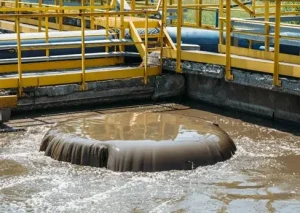
Anionic polyacrylamide is mainly used for the treatment of various industrial wastewater, mineral wastewater, domestic sewage, and sludge dewatering. It has the functions of clarifying and purifying, promoting sedimentation, promoting filtration, thickening,etc.
Cationic polyacrylamide is mainly used for flocculation, sedimentation, clarification, sludge pre concentration, and sludge dewatering of various industrial and domestic wastewater. For example, wastewater from alcohol factories, beer factories, sugar factories, and municipal sewage treatment plants for sludge concentration and dewatering.
Nonionic polyacrylamide is mainly used for the purification treatment of acidic to weakly alkaline wastewater. It mainly plays arole in flocculation, sedimentation, and clarification. Such as the treatment of papermaking and pulp wastewater, wastewater treatment in mineral processing and metal smelting processes, and wastewater treatment in steel and stone factories.
Application
It is widely used in many fileds like Water Treatment, Oil Exploration, Sludge Dewatering, Paper Making, Textile, Sugar Making, Coal washing and Incense Making, etc.

Physical and Chemical Properties
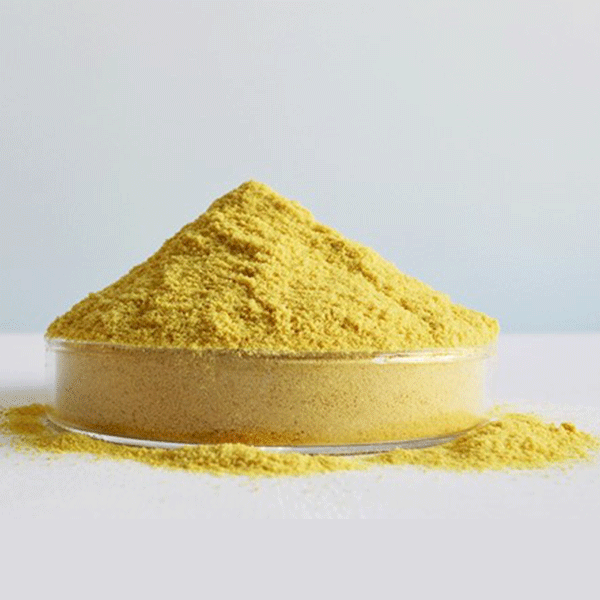
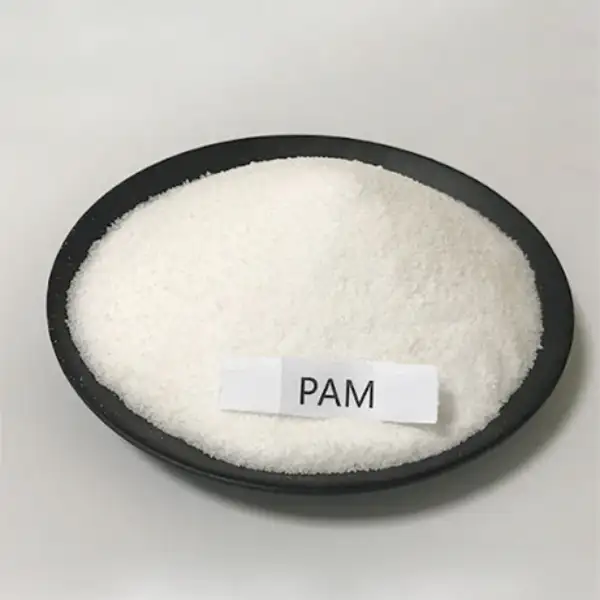
Appearance: White to off-white Crystalline Granular.
Solubility: Soluble in water, insoluble in most organic solvents.
MF: (C3H5NO)n
CAS NO.: 9003-5-8
Mesh size: 20-80mesh
Molecular weight:3-18 Million
Usage method
Dissolve PAM in an aqueous solution at a concentration of 1-3‰, and stir thoroughly for 40-60 minutes until it is completely dissolved in water, forming a colorless, transparent and viscous liquid. The specific dosage should be determined based on experiments. Generally, the dosage is determined according to the sludge concentration.
Precautions
Packaging, storage and transportation, and precautions: Store in a cool and dry place. The storage period is twelve months. When operating, pay attention to labor protection. The product should be stored in a cool, dark, well-ventilated and dry place, and moisture prevention should be noted.